
When I woke up Monday morning at 5:00 am with a headache, fever chills, and sore throat, I realized I had a problem. No, it wasn’t that I was sick—I mean, that was a problem, too, but it was nothing a little Tylenol couldn’t solve. My bigger problem… was actually a social media problem.
You see, when I woke up that morning, I was incredibly thirsty. I was out of water in my room, so I decided to go downstairs to refill my glass in the kitchen. It was dark, so I grabbed my phone to use as a light.
Big mistake.
As soon as I picked up my phone, my fingers immediately scrolled to the second page of the home screen, where I keep my social media apps. Even with the pain of a headache, which was only exacerbated by looking into the brightness of the phone screen against an otherwise pitch black darkness, I couldn’t help but scroll through Instagram the whole way down the stairs as I went to get water. On the way back, I checked Facebook. Then, I made a mental note to respond to a Snapchat I had seen a notification for, before finally climbing back into bed to get the sleep I desperately needed.
I wish I could say that night was an anomaly, but the truth is, I spend way too much time on social media. It’s one of the first things I check when I wake up in the morning and it’s usually the last thing I scroll through before bed. It’s what I look through when I’m waiting for class to start, or when I’m in an elevator with strangers and trying to avoid small talk, or when I’m bored with homework. Even as I write this post, I can feel my thumb twitching to go back to the Facebook app I was on just minutes earlier.
As if that anecdotal evidence weren’t enough, I recently discovered the “Screen Time” feature on the iPhone, which records statistics on how often you use certain apps. It turns out, in the past six days, I’ve spent a total of 6 hours on Instagram and 4 hours on Facebook. Of the 771 times that I’ve opened my phone this week, Instagram was the first app I clicked on 170 occasions and Facebook, 80. Granted, I’ve been on spring break, so I have more free time than usual. But I have a feeling the statistics for regular weeks are just as alarming.
What’s so bad about using social media a lot if it’s something I like, though? Well, for one, there’s the obvious reason that spending more time online means having less time for other more fulfilling and interesting things. In the time I spent mindlessly scrolling through Instagram this week, I could have finished the book I told myself I was going to read over spring break. Take away my Facebook time and I probably could have written another blog post.
But even beyond productivity—a lot of my scrolling happens during meals or while watching TV, anyway—social media can just be kind of stressful. You’re constantly getting numerical feedback about how much other people enjoy your content, which inevitably impacts your self-esteem, whether you’re aware of it or not. As much as I wish I could say I don’t care about likes, there is something really satisfying about getting a lot of likes and comments on a post—and something kind of disheartening about getting fewer than usual.
Then there’s all these weird unspoken rules about how to make your posts more popular. Pictures with just you in them generally get more likes than posts with other people, which get more likes than pictures of places or things. And apparently, the best time to post is from noon to 1 PM on weekdays, when everyone’s scrolling through social media on their lunch break. Ask around and everyone will tell you their own superstitious rules: you have to like exactly x number of posts a day to increase the number of likes your own get or you have to spend at least y number of hours on the app to increase your page’s popularity. It would actually be kind of fascinating to analyze all of this from a psychological viewpoint—and it’s something people in marketing do for a living—if it weren’t so stressful when your personal content is on the line.
Social media can be kind of all-encompassing once you get into it. For example, sometimes I actually think of photo and caption ideas for a post days before I can even take the photo. I’m personally not great at editing photos, but I’ve watched friends do it and it’s quite the ordeal, too. Contrast, saturation, tone, shadows—I didn’t even know there were that many elements of a photo you could edit until I watched friends hop effortlessly between each setting to prepare the perfect picture. And yet, for all the time we spend making sure our posts are just right, if you actually watch someone scroll through their social media feeds, you realize that most people spend maybe ten seconds max looking at any given post before deciding whether or not they like it. It’s a strange imbalance of energy and reward.

Confession: I thought of this caption a solid two weeks before the photo was taken.
Even if you don’t post, just being a passive observer on apps like Instagram and Facebook can be kind of exhausting. People have a way of making their lives look much more glamorous on social media than they really are, which inevitably leads you to make unfair comparisons between what you see as your average life and other people’s supposedly cooler—but in reality just as average—lives. Instagram and Snapchat also have stories (streams of photos and videos that last for only 24 hours), which let you see how much fun everyone is having in real time while you’re home alone.
What’s also always bothered me about Instagram in particular is that there’s this inherent inequality in the way “following” someone’s page works. You don’t have to follow back the people who follow you, and vice versa, which feels kind of wrong. I mean, if someone’s taking the time to look at your content, shouldn’t you return the favor? Some people will even follow you just so that you follow them back, then after a day or two they’ll un-follow you so that the number of people following them is greater than the number of people they are following (it’s called the “follower ratio” and, for some reason, it’s really important if you want your account to be successful). Of course, you could then just go and un-follow that person who un-followed you, but then you’d have to spend even more time on the app keeping track of each individual follower you have. This isn’t so much an issue on other platforms, like Facebook, where becoming “friends” is a mutual deal, but it’s nonetheless another element of social media that can contribute to your stress if you spend too much time on it.

An example of the kind of overthinking you start to let yourself do if you spend too many hours on social media. (Meme credit to the Beige Cardigan meme page on Instagram– one of the many reasons why I don’t want to delete the app completely!)
For all the stress that social media can cause, though, I would be remiss if I didn’t mention why I like it so much. For one, Facebook and Instagram are the easiest and most effective ways to share my new blog posts with a larger audience. The platforms also let you keep in touch with people you don’t see often. I follow family who live in other countries, former teachers, and high school friends on social media, and I like seeing what cool things they’re up to from time to time. Facebook and Instagram are also a goldmine of memes—and who doesn’t love memes?
I think I’m going to try to cut down on social media use for the rest of the semester. I don’t think quitting cold turkey is necessarily the solution. I know friends who have done it, but it seems that a lot of people either end up going back after a bit or just spend more time on a social network they didn’t cut out to make up for the time they’re not spending on their old social media sites. And besides, I’d be missing out on the parts of social media that I do like. I think a better solution, instead, is to set limits on my social media use.
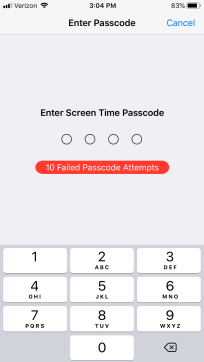
My friend recently showed me the “App Limits” feature on iPhones, which lets you turn off certain apps at pre-set times. I’m thinking of blocking my social media apps during the day—when I most need to be productive—and then leaving them on at night. Unfortunately, the “App Limits” feature requires you to put in your “Screen Time passcode” (which is different from your lock screen passcode). I still haven’t been able to figure out my passcode—I’m currently locked out of the feature for the next 60 minutes because of too many failed attempts—but once I do, I’ll set limits on Facebook and Instagram. It’ll take some trial and error to figure out the most effective strategy, but when I do, I look forward to reclaiming lost time from these highly addictive apps.
 On Ariel's Mind
One thought on “On Social Media”