
As many of you have probably noticed, I’ve been neglecting my blog quite a bit these past few months. Unfortunately, I had to take a break from regular blogging, at first because of MCAT studying and now because of senior thesis writing. This weekend, however, I was hoping to decompress a bit after a kind of hectic start to the semester, and I figured what better way to do that than by writing a post on one of my favorite topics: cheese!
Most people who know me well know that my favorite foods fall into roughly three main categories: chocolate desserts (shout out to Harvard University Dining Services’ Mississippi Mud Squares!), sour foods (particularly pickles and olives), and cheeses. Of these three categories, I am most vocal about my love for cheese. Because I talk so much about cheese, my friends will sometimes try to paint me as some sort of cheese connoisseur1 who has vast knowledge of the world’s many cheeses and a refined palate that can distinguish between even the slightest differences in cheese quality. In reality, however, I don’t actually know that much more about cheese than the average dairy-consumer. In fact, I’d probably make a terrible cheese monger because I’m also pretty bad at describing food flavors in words. Still, as a casual hobby, I do really like trying new cheeses and learning about the various cheese-making processes that exist.2 What I lack in technical knowledge, I think I make up for in my enthusiasm for the tangy snack.
In order to share this enthusiasm with all of you, I decided to make a ranking of my top 10 favorite cheeses. How many of these cheeses are also on your list?
- Oaxacan Cheese
I’ll admit, when I first tried Oaxacan cheese during a spring break trip freshman year, I found it to be kind of flavorless, with a consistency that reminded me a bit of plastic. However, after living in Mexico for two months the summer following sophomore year—and traveling multiple times to the Oaxacan region of southern Mexico—I grew to like it a lot more, perhaps because it was the only cheese served at most local restaurants. It tastes best when melted over a taco, but it’s also fun to peel the un-melted version like string cheese, especially because it usually comes in this cool twisted or braided shape.
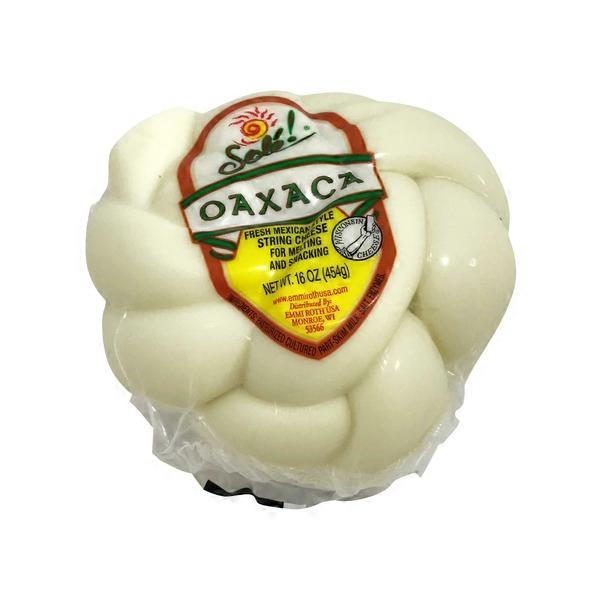
The distinctive knotted shape of queso oaxaqueño (image found here).
- Smoked Provolone
Growing up, I used to buy the Sargento® thinly sliced smoked provolone almost every week. Normal provolone is wonderful, too, but I think the smoked preparation adds a nice extra layer of flavor to the cheese that makes it especially tasty on a sandwich or a grilled burger. Even with the added smoky flavor, however, it is one of the more generic cheeses in the United States, and as a result, it’s usually a cheese I eat more because of its abundant availability than because I have a sudden craving for it.
- Feta
What’s great about feta is that it sits at the intersection of two different favorite food categories of mine: sour foods and cheeses. This can be a double-edged sword, however, because the sourness means you usually can’t eat as much feta in one sitting as other cheeses, and so it doesn’t ever quite leave you as full as the other cheeses do. Feta is also a bit of a one-trick pony in the sense that it mainly only works in Greek dishes. In fact, most people only ever eat feta on Greek salads. I do actually like to eat feta plain, and I’ve even tried it on pasta, though the texture and flavors don’t mesh as nicely with the pasta and sauce as one would hope.
- Jarlsberg
Those who knew me sophomore year of college will remember that Jarlsberg was once my number one favorite cheese. It’s a semi-soft cheese that originates in Norway and falls under the Swiss cheese family (that is, it has holes). I really liked it for its tangy—sometimes described as “nutty”—flavor, as well as for its versatility as a snack (with or without crackers) and a cooking ingredient. What’s also cool is that the cheese-making process for Jarlsberg (and other Swiss cheeses) reduces the lactose content so much that the cheese is essentially naturally lactose-free. As someone who’s technically lactose intolerant, I don’t feel as guilty when I stuff myself with Jarlsberg.
Unfortunately, because I liked Jarlsberg so much, I went through a phase during which I ate it a little too frequently, and now it’s lost some of its appeal. I’m currently on a Jarlsberg hiatus, with the hope that in a year or two I will regain my original taste for it.
- Paneer
For a while, I avoided going to Indian restaurants because I was afraid I wouldn’t be able to tolerate the spiciness of the food and because I thought all of the dishes were just different variations of chicken and vegetables, neither of which I was a huge fan of before college. Then, I learned about paneer, the most famous south Asian cheese and the food that made me completely change my mind about Indian cuisine (a fact that earned paneer its #6 spot on this list). For those who have never tried it, paneer is an unaged, soft cheese similar to mozzarella in texture and cottage cheese in taste. Admittedly, on its own paneer can be a bit bland because it is typically unsalted, but in Indian cuisine, it’s served with a variety of flavorful sauces that really make it shine. Its simplicity ultimately makes it a more versatile cooking ingredient.
- Goat Brie
I generally like brie, but it’s never really been my favorite cheese. It has an acquired taste to it because it’s quite distinct from most other commonly-eaten cheeses, and I think I just haven’t yet learned to appreciate the brie flavor, except when it is prepared as baked brie. With that said, however, over winter break my mom found this goat-cheese based brie at the local supermarket that I’ve really started to like. I’m still not quite sure why I like it more or what distinguishes it, flavor-wise, from regular cow’s milk brie, except that it somehow seems to have a bit more depth to its taste. It’s a little sour, but it also has some creamy, sweet, and nutty layers to it. From a more practical perspective, goat cheese is easier to digest than cow’s milk cheese for some people with lactose intolerance. From a much less practical or logical perspective, I also just like the idea of eating non-cow’s milk cheese because it somehow feels fancier in my head.
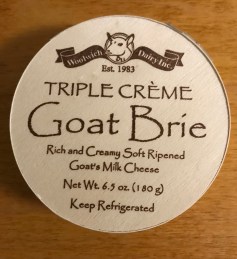
This goat brie is amazing! It’s sold at Roche Bros. and Star Market. For some reason Wegmans–– which has the largest cheese section of any supermarket I’ve ever shopped at–– actually doesn’t carry it.
- Haloumi
When I first learned about haloumi, I was fascinated by it because the cheese has such a high melting point that it can actually be fried directly on a pan without melting. I appreciate haloumi because most cheeses are eaten for their ability to melt (think pizza or mac-and-cheese), but haloumi is enjoyed for the exact opposite reason. If you’ve never tried it, I recommend getting the haloumi fries at the Greek restaurant Saloniki; they’re a great, tangy alternative to potato fries. More recently, I’ve learned that haloumi is not unique in its high melting temperature, though I will always remember it as the first fryable cheese I ever tried. Notably, another entry on this list, paneer, also has a high melting point and can be fried. Paneer, however, differs from haloumi in that it is high in acidity, while haloumi has very low acidity. Turns out, both very acidic and very basic cheeses are harder to melt.
- Burrata
I’ve always been pretty ambivalent toward mozzarella, but this summer, I tried burrata for the first time and I’ve had a pretty constant craving for it ever since. Buratta comes as a sphere, with a thin outer shell made of mozzarella and an inside stuffed with cream and a buttery Italian cheese called stracciatella. The different textures throughout the cheese, from the firm outside to the softer inside, make it especially delicious. Buratta tastes best with bread or pasta, because once you cut into, the cream inside drips out and gets soaked up by the bread/pasta, like an extra sauce for your food.
- Sargento® Ultra Thinly Sliced Sharp Cheddar
For most cheeses, I don’t necessarily have loyalty to any one brand. When it comes to cheddar, however, by far my favorite is the Sargento® ultra thinly sliced sharp cheddar; any other cheddar wouldn’t even make this top 10 list. I really enjoy the strong flavor of sharp (versus regular) cheddar and I think the thin slicing of this particular product helps portion the cheese such that you’re getting just the right amount of flavor in each bite—not too much, as with hastily cut chunks of sharp cheddar cheese blocks, but also not too little, as with regular cheddar. When I got my wisdom teeth out, this cheese was the first solid food I was able to eat because of how thin it’s cut. Because I grew up eating this cheese a lot as a kid, it’s also a more nostalgic snack for me.
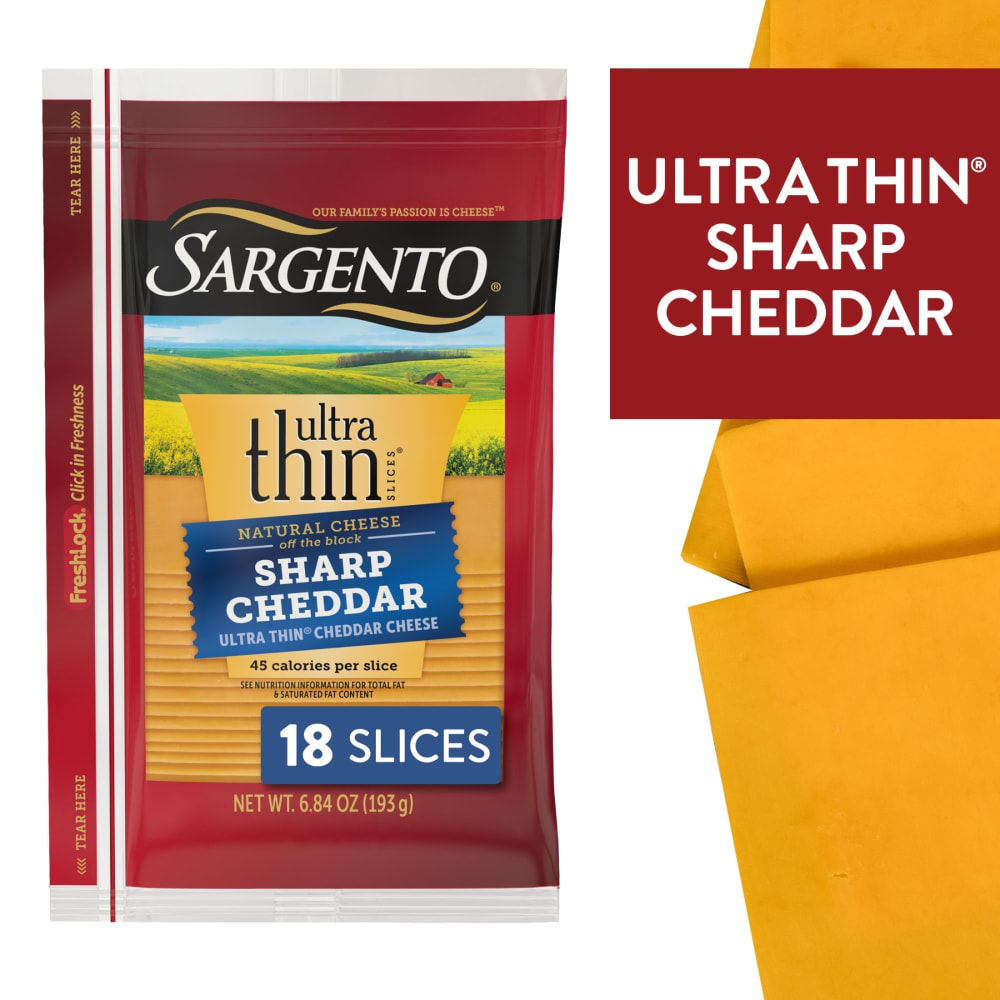
This post is not sponsored by Sargento® (image found here).
- Manchego
My favorite cheese, at least currently, is manchego, an aged Spanish cheese typically made from sheep’s milk (gotta love milk variety!). Manchego has different flavors and textures depending on how long it is aged. 3-month-old manchego is usually softer, while the 6-month variety is a semi-hard, nuttier cheese, which I prefer. I like to eat manchego with jam because I think the tangy flavor of the cheese plays nicely with the sweetness of the jam. It’s also great for serving at dinner parties or wine and cheese nights because it’s just exotic enough that not everyone is familiar with it, but not so exotic or unique that people will be wary of trying it.
Footnotes:
[1] I spelled this word right on my first try and had to take a 5 minute break from writing just to pat myself on the back for it.
[2] My dream one day is to build a cheese cave in my house so that I can learn the art of preparing fine aged cheese. For now, I’ll just have to settle for visiting the cheese cave at Formaggio Kitchen.
 On Ariel's Mind
Super cool!!!
LikeLiked by 1 person
Ariel, welcome back – missed your blogs as they are always interesting. Looking forward to trying some of your cheese recommendations.
LikeLike